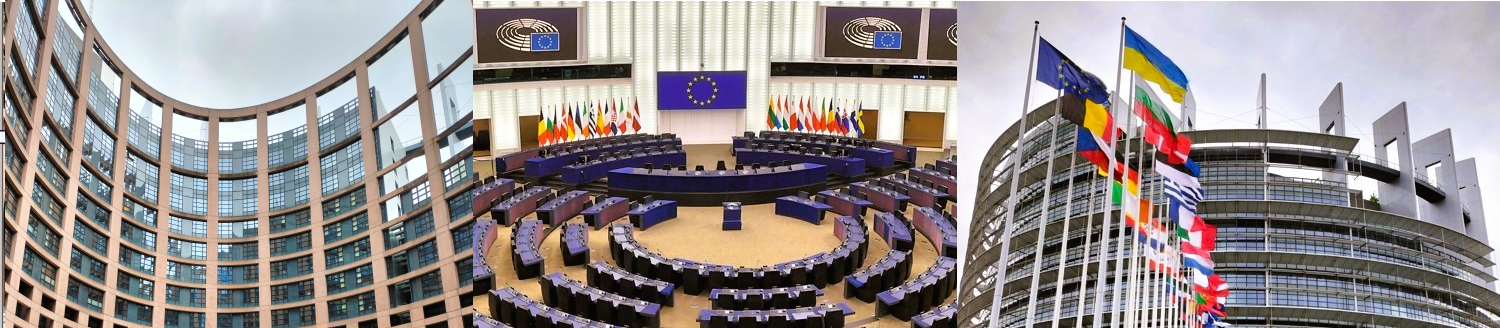
This webpage provides the reader with a brief overview of the European Union. The EU’s extensive history, institutions, bodies, agencies, and foreign relations will be discussed on other webpages on this site.
One of the most important dates in the history of the EU and European cooperation in general is 9 May 1950. On that date, French Foreign Minister Robert Schuman presented the idea for establishing a European Coal and Steel Community. The foundation of the contemporary EU lies with the establishment of the European Coal and Steel Community, which was founded in 1951 and officially came into being in 1952. This organisation sought to integrate the coal and steel industries of Belgium, France, Italy, Luxemburg, The Netherlands and the Federal Republic of Germany. The main goal was to establish lasting peace between France and Germany through economic cooperation and integration.[1] On 9 May, Europe day is celebrated by the EU every year. Europe Day commemorates the Schuman Declaration because it marked the first major step in the European integration process as well as the establishment of the European Union.[2] Today, the EU continues to strengthen and promote political and economic cooperation among its Member States.
The predecessor of the European Union was the European Economic Community (EEC). The EEC was established in 1957 by the Treaty of Rome. This organisation aimed to facilitate economic integration within Western Europe. After the founding of the EU, the EEC was renamed the European Community. In 2009, with the Treaty of Lisbon, the institutions of the European Community were fully integrated into the EU.[3]
The European Union as we know it today was established in 1993 with the Maastricht Treaty. The European Union (EU) is a union of 27 Member States. Currently, there are 9 candidate countries seeking to join the EU. Furthermore, the EU has enabled the European continent to remain influential on the world stage due to its internal market of around 450 million consumers. Without this internal market, each nation-state would have to negotiate trade deals independently, resulting in less overall leverage. The Schengen Area is vital for the free movement of goods, capital, services and people within the EU. The EU has seven major institutions: the European Commission, European Parliament, European Council, Council of the European Union, Court of Justice of the European Union, European Central Bank and the European Court of Auditors. The EU is a unique form of cooperation between nation-states, as it combines characteristics of both supranational and intergovernmental cooperation.
Apart from the institutions, the EU also has 9 bodies and more than 30 decentralised agencies. These bodies and agencies will be discussed individually on different webpages.[4] The bodies assist the EU in its tasks through their specialised roles. Their responsibilities include advising the EU institutions and ensuring compliance with EU laws and procedures. The decentralised agencies play a critical role in cooperation between the EU institutions and the Member States. The agencies pool specialist and technical knowledge and expertise that benefit both the national authorities and the EU institutions. The implementation of EU policies is also partially carried out by the decentralised agencies.[5]
The European Commission is the main executive body of the EU. It has several responsibilities, including making legislative proposals, managing the EU budget, negotiating trade deals with other countries on behalf of the entire union after approval from the European Council, and monitoring the implementation of EU legislation by the 27 Member States.[6] The European Commission is appointed for a five-year term by the European Parliament. The European Parliament is the only EU institution elected directly by the citizens of the EU Member States.[7] The Council of the European Union and the European Parliament are the co-legislators of the European Union. The Council is composed of the national ministers of the Member States. Joint negotiations form the basis of the relationship between these two institutions. When both institutions approve a new legislative text after successful negotiations, it can be adopted as EU law. This means Member States are obligated to uphold this legislation.[8] EU law takes precedence over the national laws of the Member States, and newly adopted national legislation cannot contradict EU law. If there is no conflict between EU laws and national laws, then the national laws will prevail.[9]
In the European Council, the Member States are represented by their heads of state or government. The European Council is primarily responsible for joint foreign policy decision-making and EU treaty revisions. Officially, the European Council is recognized as the highest political authority of the entire union. It is also responsible for formulating the general priorities and political direction of the European Union. Through the European Council and the Council of the European Union, the Member States continue to hold significant influence over the political future of the European Union.[10]
The European Court of Justice is responsible for the consistent application and enforcement of EU law throughout the union. This includes the institutional bodies of the European Union and its Member States. The European Court of Justice consists of two judicial bodies: the Court of Justice and the General Court. Each Member State is represented in both courts. The competence of the Court of Justice primarily focuses on cases related to challenges brought against EU legislation by Member States and the EU institutions, questions referred by national courts, and cases brought by the EU European Commission against Member States alledged to have infringed EU law. The General Court primarily handles cases related to questions from national courts on issues such as customs, VAT, and greenhouse gas emissions trading. It is also responsible for rulings regarding challenges against EU actions by companies, organizations and individuals.[11]
One of the major benefits of the European Union is common citizenship. In addition to their national citizenship, citizens of EU Member States also hold EU citizenship. EU citizenship was formally established in 1992 with the Maastricht Treaty and officially came into force in 1993. This common citizenship comes with certain privileges, such as the ability to vote in local elections while living abroad in another Member State or to seek assistance from embassies of other Member States. Citizens are also allowed to support or launch an European citizen’s initiative. Through these initiatives, citizens of the European Union can request the European Commission to propose legislation on the issue of their petition. Other rights include the freedom of movement within the EU and protection against discrimination based on nationality.[12]
[1] “Schuman Declaration May 1950,” Principles, countries, history, European Union, accessed May 26, 2026, https://european-union.europa.eu/principles-countries-history/history-eu/1945-59/schuman-declaration-may-1950_en.
[2] “Europe Day,” Principles, countries, history, European Union, accessed May 26, 2026, https://european-union.europa.eu/principles-countries-history/europe-day_en.
[3] “European Economic Community,” About, European Commission, accessed May 26, 2026, https://trade.ec.europa.eu/access-to-markets/en/glossary/european-economic-community.
[4] “Facts and figures on the European Union,” Principles, countries, history, European Union, accessed May 23, 2026, https://european-union.europa.eu/principles-countries-history/facts-and-figures-european-union_en.
[5] “Facts and figures on the European Union.”
[6] “About the European Commission,” About, European Commission, accessed May 24, 2026, https://commission.europa.eu/about_en; “EU free trade agreements: key deals and the negotiating process,” Foreign Affairs, European Parliament, accessed May 24, 2026, https://www.europarl.europa.eu/topics/en/article/20161014STO47381/eu-free-trade-agreements-key-deals-and-the-negotiating-process.
[7] “Welcome to the European Parliament,” About Parliament, European Parliament, accessed May 26, 2026, https://www.europarl.europa.eu/about-parliament/en.
[8] “European Council and Council of the European Union: What’s the difference?” European Council/Council of the European Union, accessed May 23, 2026, https://www.consilium.europa.eu/en/european-council-and-council-of-the-eu/; “Welcome to the European Parliament.”
[9] “Primacy of EU law (precedence, supremacy),” Summaries of EU legislation, EUR-Lex, accessed May 26, 2026, https://eur-lex.europa.eu/EN/legal-content/glossary/primacy-of-eu-law-precedence-supremacy.html.
[10] “European Council and Council of the European Union: What’s the difference?”
[11] “About the Court of Justice of the EU,” About us, Court of Justice of the European Union, accessed May 23, 2026, https://curia.europa.eu/site/jcms/d2_5088/en/about-the-cjeu.
[12] “EU citizenship,” Strategy and Policy, European Commission, accessed May 20, 2026, https://commission.europa.eu/strategy-and-policy/policies/justice-and-fundamental-rights/democracy-eu-citizenship-anti-corruption/eu-citizenship_en.